

 Leanna Lehman
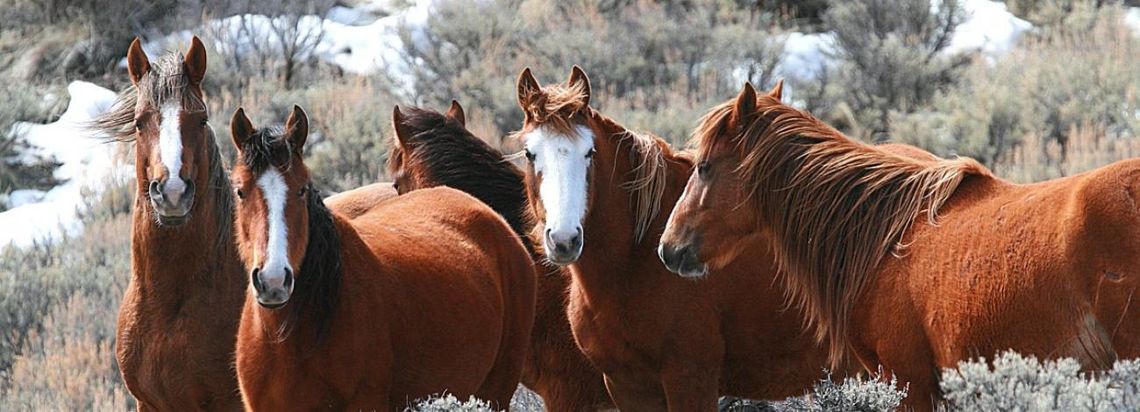
Wild horses roam across more than 23 million acres of public land in Nevada, more than twice the range of any other western state. According to Bureau of Land Management estimates for 2025, the state’s wild horse and burro population now exceeds 35,000 animals, while the land is estimated to sustainably support about 12,800.
To determine how many horses or burros a herd management area can support, the BLM evaluates land conditions and sets an Appropriate Management Level, or AML. Factors considered include available water and forage, rangeland health, soil stability, wildlife habitat needs, authorized livestock grazing, climate conditions such as drought, and the long-term sustainability of the land.
When wild horse populations exceed appropriate management levels, forage and water supplies can be depleted, leading to declining herd health and damage to rangelands. In Nevada’s high desert, where water sources are scarce and often seasonal, those impacts can escalate quickly, placing wild horses and native wildlife in direct competition for limited water. To address these conditions, the BLM gathers and places as many animals as possible into the wild horse adoption program.
According to the BLM, gathers are conducted to prevent overgrazing and long-term damage to rangelands. “Overgrazing native bunch grasses can lead to the loss of the grasses, depriving wild horses and other grazing animals of the forage that they require to survive,” explains the bureau.
Presently, there are well over 2,100 horses in Churchill County, however, the BLM has determined the area can only healthily sustain 1,348 of those. This excludes the North Stillwater herd, which is part of the East Pershing herd management area, which at the end of 2024 contained 2,875 horses – roughly six times more horses recommended 345-555.
In the past year, the BLM announced plans to gather wild horses from the 9,687-acre Lahontan Herd Management Area, located about 35 miles east of Carson City and directly south of Lahontan Reservoir, which includes portions of Churchill and Lyon counties. Aerial surveys estimated 518 wild horses in 2023, with herd numbers rising annually. The appropriate management level is set at just 7 to 10 animals, according to BLM Stillwater Field Manager Zach Reichold, far above the available resources.
The Pine Nut Mountains herd management area, which spans Lyon, Douglas and Carson Counties, has an AML 117-179 horses. In 2016, American Wild Horse Conservation reported 357 horses inside the herd area, and just 222 outside. A gather was reportedly conducted in 2019, but herd numbers continue to exceed the AML.
In addition to the planned Lahontan gather, the BLM spring census flights will assess wild horse numbers in the 162,000-acre Desatoya Herd Management Area, located about 70 miles east of Fallon and spanning Churchill and Lander Counties. The AML for the area 127-180 horses.
In 2023, the BLM conducted a roundup in the Desatoya Herd Management Area. The Bureau gathered 59 wild horses, removed 12 excess animals, released 14 stallions back onto the range, and treated 33 mares with GonaCon, a fertility control vaccine.
“We conduct gathers like this to maintain the current population of wild horses within the appropriate management level,” said Kim Dow, Carson City BLM district manager, following the gather. The management approach is intended to protect habitat for native wildlife species such as sage grouse, pronghorn antelope, mule deer, and elk by balancing wild horse herd size with what the land can support.
The planned BLM roundup for wild horses in the Lahontan Herd Management Area is not currently on the agency’s roundup schedule, and any decision on a Desatoya HMA gather will depend on the results of the upcoming herd count.
Separate from planned management actions, the BLM also conducts emergency gathers in response to wildfire and drought conditions. The 104,000-acre Jakes Fire Emergency Wild Horse Gather began on Jan. 26 around the Snowstorm Mountain and Little Humboldt Herd Management Areas within the Owyhee Complex.
BLM monitoring showed that the fire significantly reduced available forage, leaving insufficient feed to meet the nutritional needs of the remaining wild horse population. The gather resulted in 180 horses being transported to off-range corrals north of Winnemucca, where they would receive veterinary care and be prepared for the BLM wild horse adoption program.
While the BLM aims to manage wild horse populations in Nevada, animal rights groups continue to oppose roundups and the holding of wild horses and burros in off-range corrals. On Jan. 26, 2026, the U.S. Court of Appeals for the Ninth Circuit upheld a decision by the U.S. District Court for the District of Nevada that ruled in favor of the BLM’s approval of a new off-range corral near Winnemucca designed to hold up to 4,000 horses. The court found that the BLM did not violate federal law or policy guidelines.
Much like water, wild horse management is a longstanding and hotly debated issue in Nevada. With drought expected to impact several herd management areas, more roundups may be in store as the BLM tries to balance the state’s wildlife and delicate desert ecosystem with the livestock grazing needs of ranchers and respond to wild horse advocacy groups like Friends of Animals, who brought the lawsuit against the BLM.


Comment
Comments