
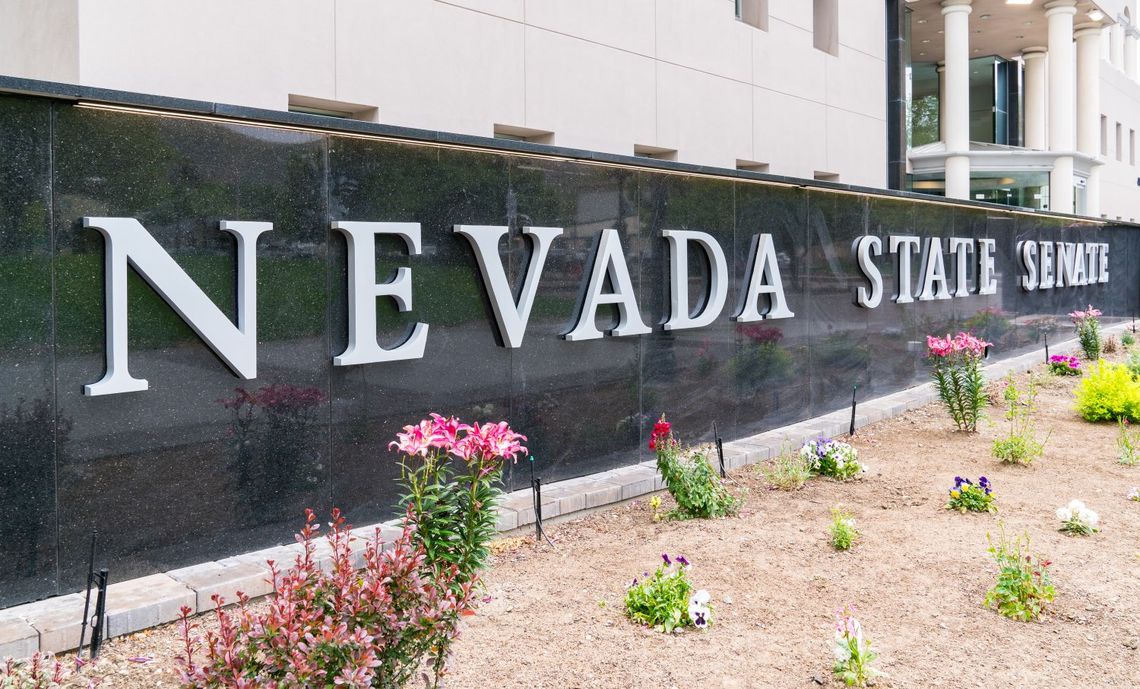
Nevada lawmakers heard a recurring message during a meeting of the Legislature’s Interim Public Lands Committee: Local governments want a stronger voice in how federal land is used, transferred and developed.
Meeting in Fernley, the committee received updates from Lyon County, Washoe County, Carson City and the U.S. Forest Service on land conveyances, housing, energy projects, wildfire prevention, recreation and public access.
Officials said public-land decisions affect nearly every part of local government, from roads and sewer systems to fire protection, housing and economic development.
Lyon County plans new lands bill
Lyon County Manager Andrew Haskin, Commissioner Tammy Hendrix and Emergency Management Director Taylor Allison said about 75% of the county is publicly owned, with most of that land managed by the Bureau of Land Management, U.S. Forest Service or Bureau of Reclamation.
The county uses public land for mining, livestock grazing, recreation, off-highway vehicle events and other activities that contribute to the local economy. Officials said the county also works with federal agencies on wildfire prevention, stormwater projects, illegal dumping, wildlife management and land-use planning.
But major energy and development projects are creating new challenges.
Lyon County has received applications or proposals for solar projects, battery storage facilities, data centers and transmission lines. Officials said local governments are often brought into the federal environmental-review process too late, after important decisions about location and infrastructure have been made.
The county has adopted a renewable-energy and battery-storage ordinance addressing project siting, setbacks, fire protection and reclamation. It is also drafting a data-center ordinance based on lessons from other communities experiencing rapid industrial growth.
Officials said they are not opposed to renewable energy but want projects located where they will not conflict with homes, public access, wildlife or other community priorities.
Lyon County commissioners approved a resolution June 6 supporting a new federal lands bill. The proposal includes 2,747 acres for direct conveyance to the county, another 3,989 acres for possible future conveyance and 1,642 acres for the Yerington Paiute Tribe.
The county also wants 1,181 acres along the Carson River protected from most development and mining activity.
Officials said the conveyed land could support roads, water and wastewater systems, communications, workforce housing and economic development. The county hopes to have the proposal ready for the next Congress in January.
Forest Service emphasizes fire prevention
Matt Zumstein, district ranger for the Carson Ranger District of the Humboldt-Toiyabe National Forest, described the agency’s work along the Sierra Front.
The district covers more than 400,000 acres from Loyalton to Topaz and serves an area near hundreds of thousands of residents.
Zumstein said wildfire suppression remains a priority because of the homes, roads, power lines and other infrastructure near Forest Service land.
Unlike more remote forests, where fire may sometimes be managed for resource benefits, crews along the Sierra Front generally try to suppress fires quickly before they threaten communities.
The district also uses mechanical thinning, prescribed fire, hand crews and targeted sheep grazing to reduce fuels before a fire starts.
Zumstein said the district has treated about 6,000 acres so far this year and generally completes around 10,000 acres annually.
He cited the Davis Fire as an example of the value of previous fuels work. Although severe weather conditions developed as forecast, treated areas helped slow the fire and gave crews more time to protect homes.
The district also participates in Nevada’s shared-stewardship program, coordinating federal, state, local, tribal and private projects across jurisdictional boundaries. Zumstein said the Carson Ranger District and its partners treated nearly 16,000 acres last year.
Targeted grazing drew particular interest from lawmakers.
Zumstein said sheep have been used for more than a decade in some areas to reduce cheatgrass and other fine fuels. The district is also working with the University of Nevada, Reno to determine the most effective seasons and conditions for grazing.
He said the approach is not appropriate everywhere, but where it works, it can provide a relatively low-cost way to reduce fire danger.
Access remains a central concern
Public access ran through nearly every presentation.
Committee members questioned counties about historic RS 2477 roads and whether required road maps had been filed with the Nevada Department of Transportation.
Sen. Ira Hansen said those maps are increasingly important as solar developments, transmission lines and other projects change access across public land.
Lawmakers also discussed shoreline access at Lake Tahoe, where Nevada law allows some beaches to remain privately controlled. Several committee members said limited access puts too much pressure on a small number of popular sites.
County representatives said any broader change to shoreline-access law would need to come from the Legislature, not local governments.
The committee is expected to use testimony from the meeting as it develops recommendations and possible bill draft requests for the 2027 legislative session.



Comment
Comments