

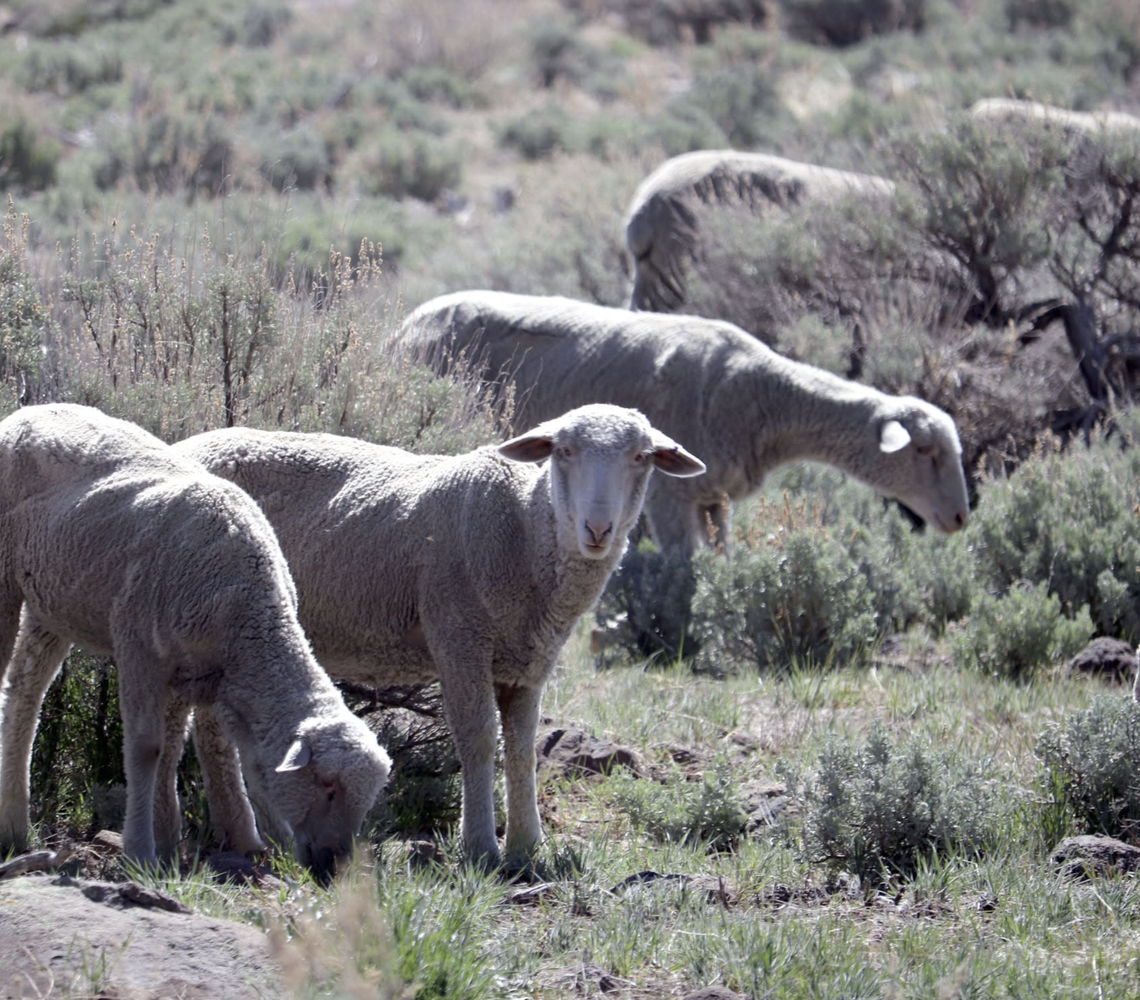
During the June 26 legislative committee on public lands, the Carson Ranger District outlined its ongoing efforts to reduce wildfire risk across national forest lands through a variety of vegetation management techniques. District Ranger Matt Zumstein explained that the U.S. Forest Service uses several methods to reduce fuels that can feed large wildfires, including thinning, prescribed fire, mastication, hand crews, and targeted sheep grazing. Among those strategies, targeted grazing has become an increasingly important tool for managing fire fuels in areas close to communities and recreation sites.
Rather than using sheep for traditional livestock production, the Forest Service uses them to consume fine fuels before they can dry out and contribute to fires. Fine fuels include fast drying, lightweight vegetation such as cheatgrass, small twigs, and pine needles. Sheep are brought into front-country areas where grazing can help lower wildfire risk near communities and popular recreation areas. To support that work, the Carson Ranger District currently has seven active grazing permittees, including three livestock use permits dedicated specifically to targeted grazing. Those permits allow sheep to graze specifically for fuel reduction projects, helping reduce the buildup of vegetation that can rapidly spread wildfire.
During the presentation, Se. Ira Hansen asked whether targeted grazing is now an established Forest Service practice or still experimental. The discussion focused on how long the practice has been used, whether it has proven effective and what additional research is still needed before expanding it further. Zumstein explained that it’s both, noting the district has used targeted grazing in some areas for decades while continuing to partner with the University of Nevada, Reno to evaluate and refine the practice. Researchers establish monitoring plots in grazed areas and collect long-term data to better understand how targeted grazing affects vegetation over time.
Zumstein said the research is also helping determine whether spring grazing during green-up or fall grazing provides the greatest reduction in fine fuels and the most effective use of resources. “We've been providing data as they'll go out, create plots and start to track that in some of the ones that have a longer-term grazing history. So I think that we are seeing benefits from it,” Zumstein said. “We have a good relationship with UNR and I think there's desire and impetus to continue that research, and certainly we are seeing good effects from having them out there.”
Zumstein also explained how targeted grazing projects are different from traditional grazing permits. Ranchers operating under traditional grazing permits pay standard grazing fees, while those participating in targeted grazing projects generally have those fees waived because they are providing a wildfire mitigation service.
“The point of these isn't so much to provide browse for the sheep as to mitigate the fine fuels. It's a little bit different than our other grazing permits.” He explained. Hansen pointed to a long-running targeted grazing project as an example of the practice’s effectiveness. “It was in 2008 Carson City area, I actually hired the Borda Sheep Company to go and graze the C- Hills,” he explained, “and it's been extremely successful.” Hansen said the area, which had been dominated by cheatgrass, has not experienced a significant wildfire since the project began. He also noted that reducing cheatgrass has allowed native perennial plants and shrubs to return, helping restore the landscape while reducing hazardous fuels.
While the program has received broad support, Zumstein acknowledged some challenges, particularly conflicts between sheep and off-leash dogs in popular recreation areas. The Forest Service works with homeowners’ associations, animal control, permittees and the public to minimize conflicts through education, outreach and scheduling.
Despite those issues, Zumstein said the district has found that public support has grown over the past decade as more people recognize the role targeted grazing plays in reducing wildfire risk. Zumstein emphasized that targeted grazing is not intended to replace other vegetation treatments, but instead complements prescribed fire, thinning and mechanical treatments. "It's a tool in the toolbox," he said, explaining that no single method can address every landscape or wildfire risk.
Legislators noted that preventing fires through targeted grazing appears to be a far less expensive approach than suppressing large wildfires and rehabilitating burned landscapes afterward. Zumstein agreed, describing sheep grazing as one of several tools used in the Forest Service's active management strategy. He said the district plans to continue expanding the practice where conditions are appropriate, with the goal of preventing catastrophic fires before they begin.


Comment
Comments