

 Leanna Lehman
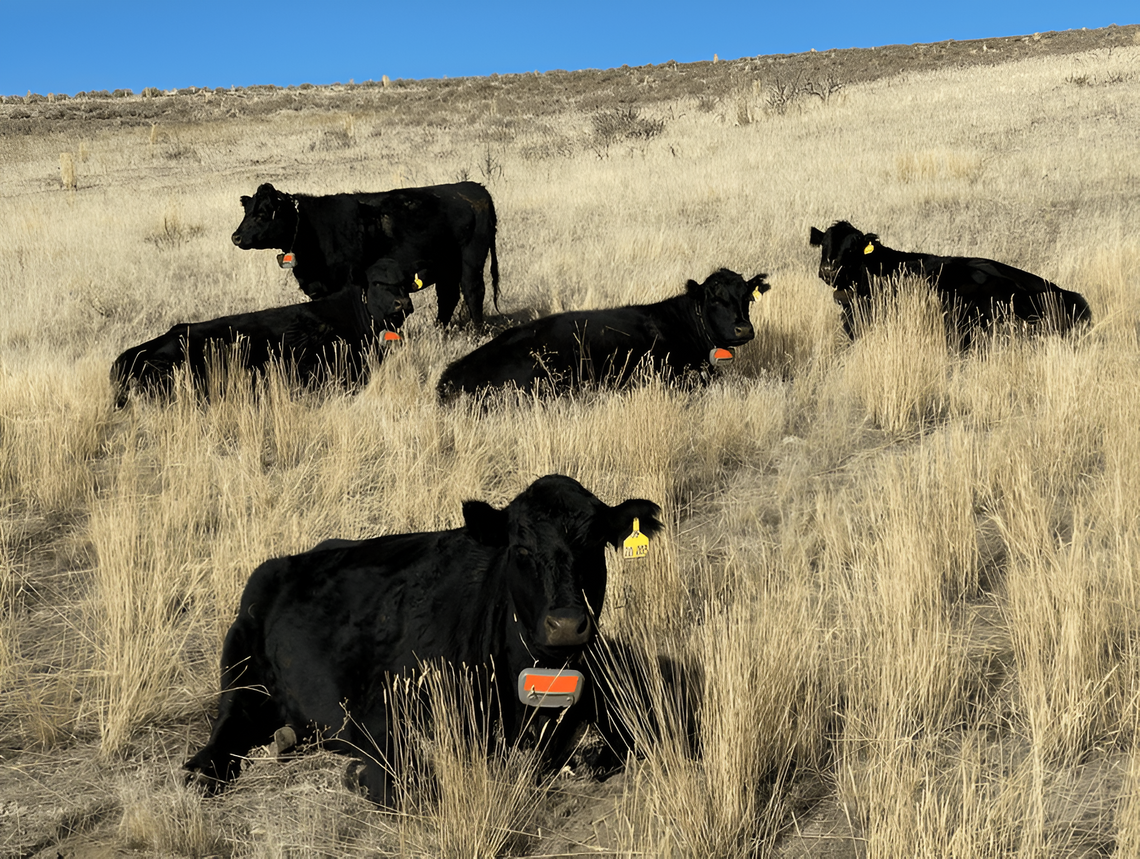
Across Nevada’s open country, the work of hauling barbed wire, pounding posts, and patching tired fencelines remains part of daily ranch life. But as rangeland conditions grow more complex and labor demands increase, some ranchers are turning to a new tool backed by University of Nevada, Reno researchers: virtual fencing.
The technology uses GPS-enabled collars and software to guide cattle in real time without physical barriers. Ranch managers can draw boundaries on a phone or tablet, rotating grazing land and shifting herds across rugged ground that would normally require days of horseback or ATV work. Specialists from the University’s Extension and Experiment Station programs, both part of the College of Agriculture, Biotechnology & Natural Resources, say the approach shows promise for protecting riparian areas, improving wildlife forage, and reducing wildfire fuel loads, concerns familiar to anyone running cattle across Nevada’s fragile landscapes.
“Virtual fencing technology isn’t brand new, but it’s emerging in a way that finally makes sense on working rangelands,” said Paul Meiman, an Extension state specialist who also conducts research for the Experiment Station. “It offers tremendous promise for both federal land management agencies and ranchers because it provides a level of flexibility in grazing management that we’ve never had before, especially when managing landscapes with sensitive riparian areas.”
With support from the Bureau of Land Management, U.S. Fish & Wildlife Service, and the U.S. Forest Service, Meiman has been working with ranches to pilot the technology across tens of thousands of acres of Nevada country. The test sites range from brushy foothills to sweeping sage valleys, where traditional fencing can be costly, impractical, or disruptive to wildlife movement.
At Maggie Creek Ranch in Elko County, nearly a quarter-million acres of private and public ground, Meiman partnered with ranch manager Jon Griggs to train a herd of 200 yearling heifers. After a virtual fencing company installed two receiver stations, each capable of transmitting signals up to 10 miles depending on terrain, the crew fitted the heifers with GPS collars and created the first digital grazing boundaries.
“As a cow approaches the invisible boundaries, the collar emits a beep as a warning,” Meiman said. “If the animal persists into the restricted zone, it delivers a mild pulse along with another beep. Over time, the cattle learn the pattern and adjust their movements on their own.”
Within three days, the heifers were responding reliably to the cues. “Virtual fencing gave us a level of control that we don’t typically get on large, open rangeland,” Griggs said. “We were able to place cattle exactly where we wanted them and move them through the pasture more efficiently. For operations like ours, it shows real promise, especially in areas where traditional fencing or herding just isn’t practical.”
After three years in the project, Griggs said the system has helped improve grazing efficiency while supporting habitat used by mule deer, wild turkeys, waterfowl, and other wildlife alongside the ranch’s cattle and horses. Maggie Creek Ranch has long been recognized for its conservation practices, as has the Cottonwood Ranch in Wells.
A second UNR research team tested virtual fencing in Paradise, Nevada, focusing on one of the state’s most persistent rangeland problems: cheatgrass. The project, led by assistant professor Tracy Shane and graduate student Austin Lemons, used virtual fencing to place cattle on cheatgrass during the fall.
“Cheatgrass is a persistent challenge for rangelands because it sprouts early, outcompetes native perennial grasses and quickly depletes soil moisture and nutrients,” said Lemons, who also serves as conservation manager for the Dayton Valley Conservation District. “Once established, it forms dense, dry stands that are highly flammable, increasing wildfire risk.”
Lemons said logistical and archaeological constraints often make traditional fencing difficult. After a short training period with the cattle, ranchers used the app to adjust grazing zones and provide feedback as the study progressed.
“The advantage of this approach is that after summer, cheatgrass often greens up again while most native plants do not, directing cattle to focus primarily on the invasive species,” he said. The hope is to reduce the seed bank, clear dry litter that fuels fires, and limit future cheatgrass growth.
Early results were promising. At one study site, targeted fall grazing reduced cheatgrass biomass from 400 pounds per acre to just over 100 pounds per acre, a 75% drop in carry-over fuels.
Ranchers participating in the studies also noticed practical benefits. Keeping cattle within tighter zones encouraged them to broaden their diet instead of repeatedly selecting preferred grasses, leading to more balanced pasture use.
“By guiding cattle to work through each grazing area before moving on to the next, we immediately saw reduced pressure on preferred grasses and better long-term sustainability of forage resources,” Griggs said.
Researchers caution that broad ecological changes take years. Shane noted that most grazing-related vegetation shifts occur on a three- to ten-year timeline, so teams track short-term indicators such as stubble height, streambank conditions, and early vegetation responses.
Cost remains the primary barrier for adoption. Each base station runs about $10,000, and ranchers pay roughly $60 per collar per year for service. Additionally, heavy tree cover or steep terrain can cause connectivity gaps, limiting real-time controls.
Support from the Nevada Agricultural Foundation, the Nevada Division of Forestry, the Nevada Department of Wildlife, the U.S. Forest Service, and the BLM has helped offset those costs for pilot ranches. University teams plan to continue expanding virtual fencing trials to build a toolset that fits Nevada’s diverse livestock operations.


Comment
Comments